
Possible Invisalign Complications and How to Avoid Them
March 3, 2025
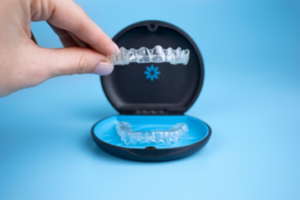
Invisalign is a popular orthodontic treatment for a reason. Patients love its many advantages (such as improved comfort and the low-profile appearance) and generally find that the results are well worth it.
When considering any dental treatment, though, it’s important to get a sense of the potential complications. Understanding what could go wrong can actually help you avoid difficulties, after all! To learn more about how Invisalign works and how it might affect you, keep reading.
General Discomfort
One of the most common effects of Invisalign is general oral discomfort. The aligners are designed to carefully nudge your teeth into straighter alignments, which can make them feel tender and sore. While you can expect this to lessen as your mouth gets used to the aligners, remember that you’ll receive a new set about every two weeks. Newer, tighter trays can cause flare-ups.
Fortunately, Invisalign discomfort is often minimal and manageable. Patients find that the aches are less than what they would experience with traditional braces, and report that taking over-the-counter pain relievers is usually enough to alleviate pain.
Rare Allergic Reactions
Invisalign is made out of smooth, plastic materials that are generally safe to have in your mouth. However, if you’re allergic to one of the components in the aligners, you may experience itching, swelling, or rashes. These reactions are rare, but let your dentist know right away if your oral cavity doesn’t feel quite right!
Changes in Speech
Your aligners will be incredibly low-profile – for the most part. Since your mouth is a relatively small space, even a little bit of additional thickness can make a difference. Some patients find it more difficult to enunciate clearly and avoid lisps when they speak with their aligners. The good news is that this effect is usually temporary, and fades as you get used to your Invisalign!
Bacteria Build Up
If you don’t clean your teeth and your Invisalign properly, you risk developing cavities and gum disease as a result of bacteria build up. Now, this can happen with or without clear aligners, but the trays can trap plaque and food particles against your teeth, making hygiene especially important during treatment!
Overall, Invisalign is a low-risk orthodontic treatment with plenty of benefits for your oral health. Complications can occur if you’re not careful or in special circumstances, but keeping an open line of communication with your dentist should help you avoid any serious issues. Ask them how to best take care of your smile and your Invisalign, and they’ll gladly help you promote a smooth treatment experience!
About the Author
Dr. Marco Caballeros is a highly accomplished dentist. After earning his dental degree from the Texas A&M Baylor College of Dentistry, he pursued further education at Baylor’s Advanced Education in General Dentistry and completed a Fellowship with the Academy of General Dentistry. He works hard to ensure he can provide the best possible care for his patients, and if you’re considering an Invisalign treatment, Dr. Caballeros would be happy to help you determine whether it’s the right choice for you! To contact his office, call 469-476-4092.
No Comments
No comments yet.
RSS feed for comments on this post.
Sorry, the comment form is closed at this time.